By: John Grochowski & Yves Jeffcoat
|
Updated: Aug 31, 2023
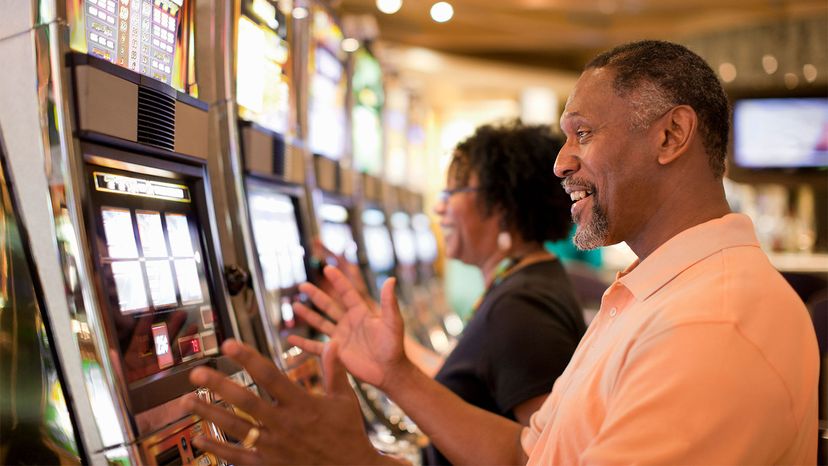
In 2019, the average American adult spent around $261 on casinos and lottery tickets per year, according to USA Today. David Sacks/Getty Images
In the not-too-distant past, slot-machine players were the second-class citizens of casino customers. Jackpots were small, payout percentages were horrendous and slot players just weren't eligible for the kind of complimentary bonuses — free rooms, shows, meals — commonly given to table players.
But in the last few decades the face of the casino industry has changed. Sports betting and internet gaming are growing rapidly and are becoming a larger piece of the revenue pie for casinos. But they are still no match for slot machines.
Though commercial casino gaming revenue dropped in the U.S. in 2020 due to the coronavirus disease pandemic, a hefty 63 percent of that revenue came from electronic gaming devices — and in many jurisdictions, that figure tops 80 percent. (The American Gaming Association considers slot machines "electronic gaming devices" and includes video poker, instant racing and similar platforms in the category.)
Slot machines are more popular than table games for a reason. It's easy — just drop coins into the slot and push the button or pull the handle. Newcomers can find the personal interaction with dealers or other players at the tables intimidating — slot players avoid that. And besides, the biggest, most lifestyle-changing jackpots in the casino are offered on the slots.
Advertisement
Here's everything you need to know about slots, from the basics to various strategies. We'll start at square one, with a primer on how playing slot machines works.
How to Play Slots
There are lots of types of slot machines, typically fun and easy to play. Viktorcvetkovic/getty images
In the early days of slot machines, all of the games used mechanical reels. But now, most slot machines display reels on video screens, and they usually take and dispense payment through bills, vouchers and tickets rather than coins or tokens.
Denominations
Slot machines offer several denominations, where the denomination is the value of each credit played. There are games in penny, 2-cent, nickel, 10-cent, quarter, dollar and even $100 denominations, and some machines allow players to choose which denomination they want to use. Once you pay the machine, your money is converted into credits. Slots can take 45, 90 and even 500 credits at a time.
Advertisement
Once payment is inserted into the currency acceptor, the equivalent amount of credits is displayed on a meter. On reel-spinning slots, push a button marked "play one credit" until you've reached the number of coins you wish to play. Then hit the "spin reels" button, or pull the handle on those few slots that still have handles, or hit a button marked "play max credits" or "bet max," which will play the maximum credits allowed per spin on that machine.
Paylines
On video slots, push one button for the number of paylines you want to activate, and a second button for the number of credits wagered per line. One common configuration has nine paylines on which you can bet 1 to 5 credits. Video slots are also available with 5, 15, 20, 25 and even 50 or more paylines, accepting up to 25 credits per line.
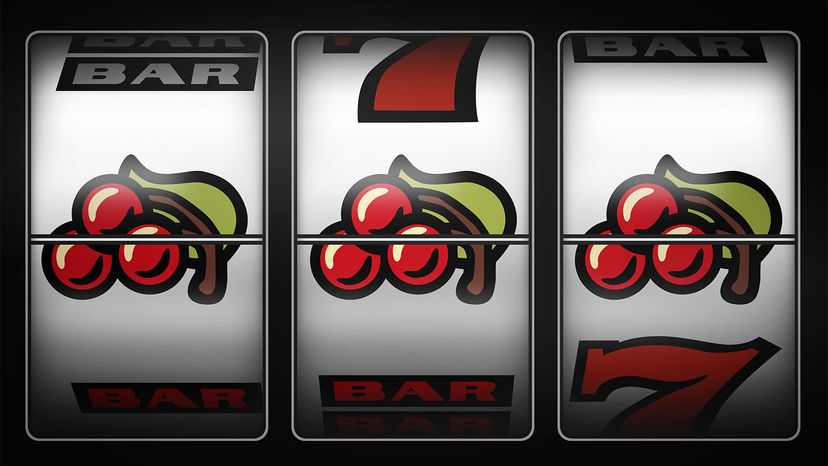
The symbols that stop on a payout line determine whether a player wins. The classic symbols are cherries, bars, double bars (two bars stacked atop one another), triple bars and sevens. But there are plenty others, such as fruit, playing card symbols and images based on the theme of the game.
A single cherry on the payout line, for example, might pay back two credits; the player might get 10 credits for three of any bars (a mixture of bars, double bars, and triple bars), 30 for three single bars, 60 for three double bars, 120 for three triple bars, and the jackpot for three sevens.
However, many of the stops on each reel will be blanks, and a combination that includes blanks pays nothing. Likewise, a seven is not any bar, so a combination such as bar-seven-double bar pays nothing.
Reels
Video slots typically have representations of five reels spinning on a video screen, but there are slots with more reels. Paylines not only run straight across the reels but also run in V's, upside down V's, zigs and zags, and other configurations across the screen.
In addition, video slots usually feature bonus rounds and "scatter pays." Designated symbols trigger a scatter pay if two, three, or more of them appear on the screen, even if they're not on the same payline.
Bonus Events
Similarly, special symbols will trigger a bonus event. For instance, the bonus may take the form of free spins, pick-a-prize interactions, or mystery bonuses. The player may be presented with a "second screen" bonus.
An example of a second screen bonus comes in the long-popular WMS Gaming Slot "Jackpot Party." If three Party noisemakers appear on the video reels, the reels are replaced on the screen with a grid of packages in gift wrapping. Players touch the screen to open a package and collect a bonus payout. They may keep touching packages for more bonuses until one package finally reveals a "pooper," which ends the round.
These bonus rounds helped video slots grow in popularity, but they aren't as prevalent today, as game designers experiment with format.
Cashing Out
When you hit a winning combination, winnings will be added to the credit meter. If you wish to collect the credits showing on the meter, hit the button marked "Cash Out," and on most machines, a bar-coded ticket will be printed out that can be redeemed for cash. In a few older machines, coins still drop into a tray.
Advertisement
Slot Machine Etiquette
Many slot players pump money into two or more adjacent machines at a time, but if the casino is crowded and others are having difficulty finding places to play, limit yourself to one machine.
As a practical matter, even in a light crowd, it's wise not to play more machines than you can watch over easily. Play too many and you could find yourself in the situation faced by the woman who was working up and down a row of six slots. She was dropping coins into machine number six while number one, on the aisle, was paying a jackpot. There was nothing she could do as a passerby scooped a handful of coins out of the first tray.
Advertisement
Sometimes players taking a break for the restroom will tip a chair against the machine, leave a coat on the chair, or leave some other sign that they'll be back. Take heed of these signs. A nasty confrontation could follow if you play a machine that has already been staked out.
Payouts
A slot machine hits the cherry jackpot.
sweetandsour/getty images
Payout percentages, or the proportion of wagers returned to players as winnings, have risen since the casinos figured out it's more profitable to hold 5 percent of a dollar than 8 percent of a quarter or 10 percent of a nickel.
In most of the country, slot players can figure on about a 93 percent payout percentage, though payouts in Nevada run higher. Keep in mind that these are long-term averages that will hold up over a sample of 100,000 to 300,000 pulls.
In the short term, anything can happen. It's not unusual to go 20 or 50 or more pulls without a single payout on a reel-spinning slot, though payouts are more frequent on video slots. Nor is it unusual for a machine to pay back 150 percent or more for several dozen pulls. But in the long run, the programmed percentages will hold up.
Stops
Since earlier slot machines were mechanical, if you knew the number of stops — symbols or blank spaces that could stop on the payout line — on each reel, you could calculate the odds on hitting the top jackpot. If a machine had three reels, each with ten stops, and one symbol on each reel was for the jackpot, then three jackpot symbols would line up, on the average, once every 10,310,310 pulls, or 1,000 pulls.
On those machines, the big payoffs were $50 or $100 — nothing like the big numbers slot players expect today. On systems that electronically link machines in several casinos, progressive jackpots reach millions of dollars.
The microprocessors driving today's machines are programmed with random-number generators that govern winning combinations. It no longer matters how many stops are on each reel.
If we fitted that old three-reel, ten-stop machine with a microprocessor, we could put ten jackpot symbols on the first reel, ten on the second, and nine on the third, and still program the random-number generator so that three jackpot symbols lined up only once every 1,000 times, or 10,000 times. And on video slots, reel strips can be programmed to be as long as needed to make the odds of the game hit at a desired percentage. They are not constrained by a physical reel.
Each possible combination is assigned a number or numbers. When the random-number generator receives a signal — anything from a button being pressed to the handle being pulled — it sets a number, and the reels stop on the corresponding combination.
Between signals, the random number generator operates continuously, running through dozens of numbers per second. This has two practical effects for slot players. First, if you leave a machine, then see someone else hit a jackpot shortly thereafter, don't fret. To hit the same jackpot, you would have needed the same split-second timing as the winner. The odds are overwhelming that if you had stayed at the machine, you would not have hit the same combination.
Second, because the combinations are random, or as close to random as is possible to set the program, the odds of hitting any particular combination are the same on every pull. If a machine is programmed to pay out its top jackpot, on the average, once every 10,000 pulls, your chances of hitting it are one in 10,000 on any given pull.
If you've been standing there for days and have played 10,000 times, the odds on the next pull will still be one in 10,000. Those odds are long-term averages. In the short term, the machine could go 100,000 pulls without letting loose of the big one, or it could pay it out twice in a row.
Advertisement
Slot Machine Myths
Because most players do not understand how slot machines work, whole sets of beliefs have grown over when to play a machine and when to avoid it. Little truth is in any of them. Here's a look at some of the more pervasive slot myths.
Change machines after a big jackpot — the machine won't be due to hit again for some time.
From a money management standpoint, it makes sense to lock up the profits from a big hit and move on. But the machine is not "due" to turn cold. In fact, the odds against the same jackpot hitting on the next pull are the same as they were the first time.
Advertisement
Play a machine that has gone a long time without paying off — it is due to hit.
Slot machines are never "due." Playing through a long losing streak all too frequently results in a longer losing streak.
Casinos place "hot" machines on the aisles.
This belief is so widespread that end machines get a good deal of play regardless of how they pay. It is true that not all machines in the same casino are programmed with the same payback percentage. And it's true that casinos want other customers to see winners. But slot placement is more complex than just placing the hot ones at the ends of aisles.
The payback percentage is lowered when the crowds are bigger and demand is greater.
It's not that easy to change a machine's programming. Changing the programmed payback percentage requires opening the machine and replacing a computer chip. That's not something to do cavalierly. Server-based slot machines that allow casinos to change payout percentages remotely, but there are still regulations around making these changes.
Advertisement
Slot Machine Strategies
Are there really any strategies to winning at the slot machines? eclipse_images/getty images
Slots are the easiest games in the casino to play — spin the reels and take your chances. Players have no control over what combinations will show up or when a jackpot will hit. There is no way to tell when a machine will be hot or cold. Still, there are some pitfalls. It's important to read the glass or help menu and learn what type of machine it is. The three major types of reel-spinning slots are the multiplier, the buy-a-pay and the progressive.
The Multiplier
On a multiplier, payoffs are proportionate for each coin played — except, usually, for the top jackpot. If the machine accepts up to three credits at a time, and if you play one credit, three bars pay back ten. Three bars will pay back 20 for two credits and 30 for three credits. However, three sevens might pay 500 for one credit and 1,000 for two, but jump to 10,000 when all three credits are played.
Advertisement
Read the glass to find out if that's the case before playing less than the maximum coins on this type of machine.
The Buy-a-Pay
Never play less than the maximum on a buy-a-pay, on which each credit "buys" a set of symbols or a payout line. The first coin in might allow the player to win only on cherry combination, while the second coin activates the bar payouts, and the third coin activates the sevens.
Woe is the player who hits three jackpot symbols on a buy-a-pay with only one coin played — the player gets nothing back.
A variation is the machine with multiple payout lines, each activated by a separate credit. All symbols are active with each credit, but if a winning combination lines up on the third-credit payout line with only one or two credits played, the payoff is zero.
The Progressive
You also have no reason to play less than maximum coins on a progressive machine. A player who eventually lines up the jackpot symbols gets a percentage of each coin played.
The first progressive machines were self-contained — the jackpot was determined by how much that particular machine had been played since the last big hit. Today most progressives are linked electronically to other machines, with all credits played in the linked machines adding to a common jackpot.
These jackpots can be enormous — the record is $39,710,826.26, a $1 progressive at a Las Vegas casino. The tradeoff is that frequency and size of other payouts are usually smaller. And you can't win the big jackpot without playing maximum credits.
If you must play fewer than maximum credits, look for a multiplier in which the final-coin jump in the top jackpot is fairly small. Better yet, choose a machine that allows you to stay within your budget while playing maximum credits.
If your budget won't allow you to play maximum credits on a $1 machine, move to a quarter machine. If you're not comfortable playing three quarters at a time, move to a two-quarter machine. If you can't play two quarters at a time, play a nickel machine.
The Difference With Video Slots
With so many paylines and the possibility of betting multiple credits per line, video slots are different. Some penny slots with 20 paylines take up to 25 coins per line. That's a $5 maximum bet — a pretty penny indeed!
Most players bet less than the max on video slots but are sure to cover all the paylines, even if betting only one credit per line. You want to be sure to be eligible for the bonus rounds that give video slots most of their fun. Some progressive jackpots require max bets, and some don't.
If a max bet is required to be eligible for the jackpot and you're not prepared to roll that high, find a different machine.
Advertisement
Money Management
Managing your money wisely is the most important part of playing any casino game, and also the most difficult part of playing the slots. Even on quarter machines, the amount of money involved runs up quickly. A dedicated slot player on a machine that plays off credits can easily get in 600 pulls an hour. At two quarters at a time, that means wagering $300 per hour — the same amount a $5 blackjack player risks at an average table speed of 60 hands per hour.
Most of that money is recycled from smaller payouts — at a casino returning 93 percent on quarter slots, the expected average loss for $300 in play is $21. Still, you will come out ahead more often if you pocket some of those smaller payouts and don't continually put everything you get back into the machine.
Advertisement
One method for managing money is to divide your slot bankroll for the day into smaller-session bankrolls. If, for example, you've taken $100 on a two-and-a-half-hour riverboat cruise, allot $20 for each half-hour. Select a quarter machine — dollar machines could devastate a $100 bankroll in minutes — and play the $20 through once. If you've received more than $20 in payouts, pocket the excess and play with the original $20. At the end of one half-hour, pocket whatever is left and start a new session with the next $20.
If at any point the original $20 for that session is depleted, that session is over. Finish that half-hour with a walk, snack or drink until it is time for a new session. Do not dip back into money you've already pocketed.
That may seem rigid, but players who do not use a money management technique all too frequently keep pumping money into the machine until they've lost their entire bankroll. The percentages guarantee that the casino will be the winner in the long run, but lock up a portion of the money as you go along, and you'll walk out of the casino with cash on hand more frequently.
There is a lot more to slot machines than meets the eye. But if you learn the ins and outs of playing them, you can use some strategies that just might help you hit the jackpot.
Slot Machines of the Future
Interest in and revenue from online gaming has been growing rapidly. Online slots are attracting more players as mobile gaming technology advances and law changes. And it doesn't hurt that they also have huge payouts — like the 18.9 million euro ($22.4 million) Mega Moolah payout in 2018.
Advertisement
Play Slot Machines FAQ
Is there a secret to slot machines?
Not really, but despite the overriding elements of chance, there are some strategies you can employ.
How do you play slot machine games?
The equivalent amount of credits is displayed on a meter. On reel-spinning slots, push a button marked "play one credit" until you've reached the number of coins you wish to play. Then hit the "spin reels" button, or pull the handle on those few slots that still have handles, or hit a button marked "play max credits," which will play the maximum coins allowed on that machine.
How much does it cost to play on slot machines?
The most popular slots are penny and nickel video games along with quarter and dollar reel-spinning games, though there are video games in 2-cent, 10-cent, quarter, and dollar denominations and reel spinners up to $100.
What happens if you win?
When you hit a winning combination, winnings will be added to the credit meter. If you wish to collect the coins showing on the meter, hit the button marked "Cash Out," and on most machines, a bar-coded ticket will be printed out that can be redeemed for cash.
Are there free slots that pay real money?
No, but you can earn bonuses. The bonus may take the form of a number of free spins, or the player may be presented with a "second screen" bonus.
Cite This!
Please copy/paste the following text to properly cite this HowStuffWorks.com article: